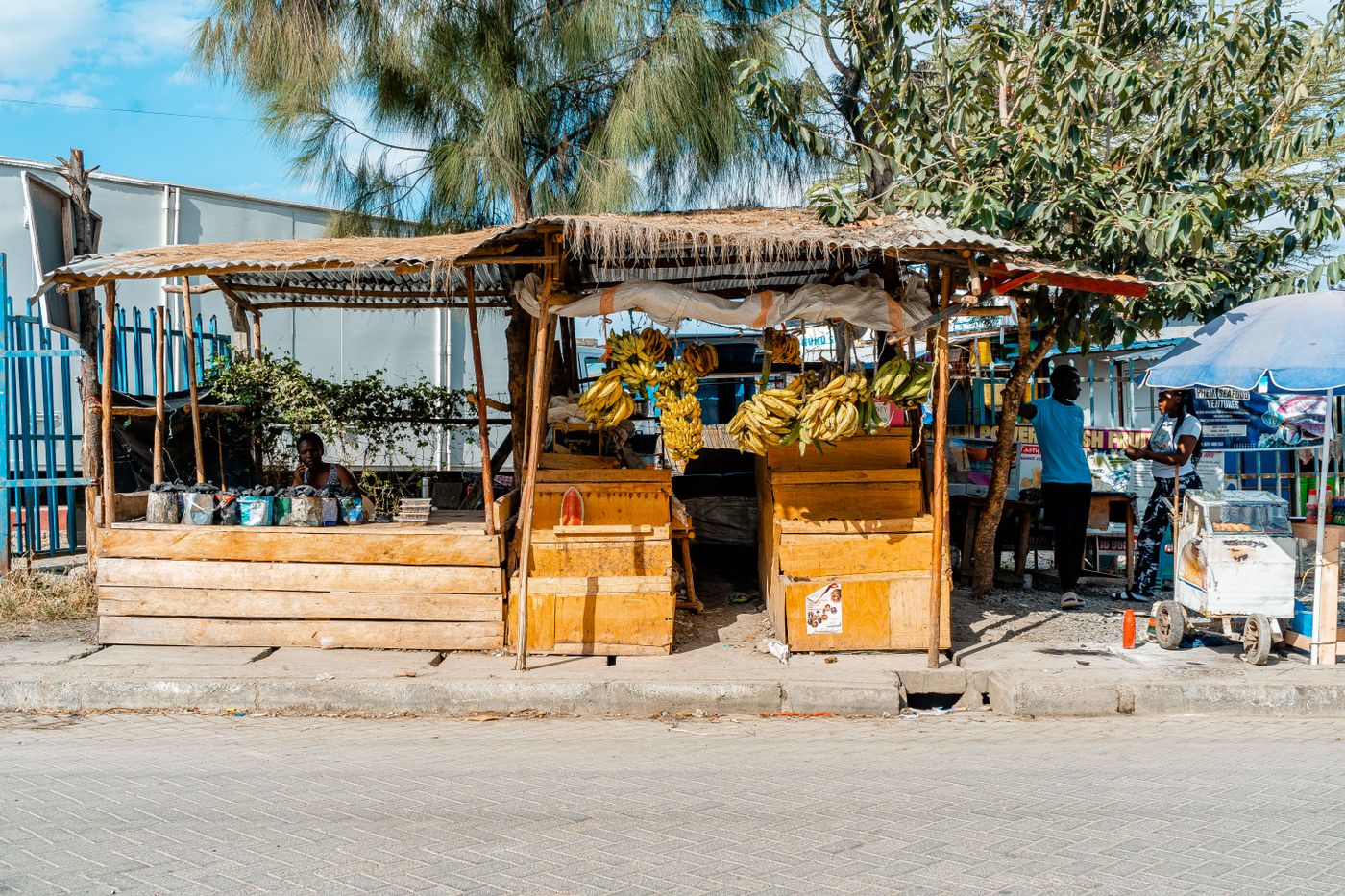
Begin with a gap that anyone working in Kenyan tourism will recognise. The official figures report international arrivals and the receipts they generate, and each year the ministry announces whether the numbers are up or down. Yet an operator who actually runs lodges, camps or a tour business will often tell you those figures do not describe the business they live in. They see domestic Kenyans travelling in numbers the headline arrivals data was never built to count, regional visitors arriving overland and paying in local currency, guests booked through informal channels and paying in cash, and a whole layer of activity that never resolves into the clean international-arrival-and-receipt figure the system is designed to capture. The official number is not fabricated. It is simply measuring something narrower than the thing it is taken to represent, and the people closest to the business can feel the difference.2
The Corridor Index framework reads a tourism economy by asking where the value is captured and who controls the terms. Across this year the series has traced value leaving African tourism through the booking, the building, the carbon, the tax, the intelligence layer and the debt pressure beneath them all. This issue is about the layer beneath even that, the measurement through which all the others are seen. Before a government can decide who captures the value or who carries the risk, it has to be able to see the value in the first place, and it sees it through a statistical apparatus that was not designed on the continent and does not see the continent's tourism as it actually is. Measurement is not a neutral technical matter. It decides what is visible to policy, and what is invisible tends to go ungoverned, unfunded and unbuilt.
Who designed the lens
The international standard for measuring tourism's economic weight is the Tourism Satellite Account, a methodological framework developed by the UN World Tourism Organization, the OECD and the United Nations Statistics Division and recommended for adoption worldwide. It is a serious and useful instrument, and the point here is not that it is badly built. The point is where it was built and what it was built to see. The framework defines who counts as a visitor, what counts as tourism expenditure, and how the sector's contribution to the economy is to be tallied, and those definitions are optimised for economies where most activity is formal, recorded and transacted through channels that leave a statistical trace. In that setting the account works well. In an economy where a large share of tourism is informal, domestic, regional and conducted in cash, the same framework captures the visible formal layer accurately and the larger informal layer poorly, not because the statisticians are careless but because the instrument was calibrated for a different kind of economy.1
The consequence is that African states measure their tourism with a tool whose blind spots fall exactly where their distinctive strengths lie. South Africa maintains a full Tourism Satellite Account through its statistics agency, and even there the domestic market has to be deliberately and carefully estimated. Most African states run partial accounts or none, and lean instead on international arrivals and receipts, the two figures the framework measures most readily and the two that describe the foreign visitor rather than the domestic one. So the measurement is sharpest precisely where the hard currency enters, and weakest precisely where the domestic and regional economy lives. This is convertibility bias, the pattern this publication named in an earlier issue, now visible one level deeper.4 The system does not merely value hard-currency activity more highly. It sees hard-currency activity more clearly, and renders the rest faint.3
Why mismeasurement is not harmless
It would be tempting to treat all this as a technicality, the kind of thing statisticians worry about while the real economy carries on regardless. It is not harmless, because the numbers do real work. When a government decides where to put its tourism budget, it looks at the data, and data that undercounts domestic travel makes the domestic market look smaller and less worth supporting than it is. When an investor weighs a project, or a lender assesses the sector's contribution to the balance of payments, or a minister defends tourism's share of the national accounts, they all reach for the same figures, and those figures are weighted toward the foreign arrival. The measurement quietly reinforces the very model this series has spent the year questioning. A statistical apparatus that sees the international visitor clearly and the domestic one faintly will, year after year, tell decision-makers that the international visitor is where tourism's value lies, and policy will follow the number. The domestic market that this publication argued is the resilient, value-retaining core of African tourism is the market the measurement is least able to show, which means it is the market policy is least often moved to build. Mismeasurement is not a neutral error. It has a direction, and the direction runs against domestic value.5
The system does not merely value hard-currency activity more highly. It sees hard-currency activity more clearly, and renders the rest faint. What is invisible tends to go ungoverned, unfunded and unbuilt.
The honest limit of the argument
Two cautions keep this honest. The first is that the measurement problem is genuinely hard, not merely neglected, and the international framework is not a villain. Counting informal, cash-based, cross-border activity is difficult everywhere in the world, rich economies included, and the Tourism Satellite Account exists precisely to bring discipline and comparability to a sector that was once measured even more loosely. African statistical offices work with real constraints of budget and capacity, and better measurement is partly a question of resources, not only of who designed the template. It would be unfair to present careful statisticians as agents of dependency; many are doing serious work with thin means. The second caution is that the domestic market, while large and under-counted, is not a complete substitute for foreign-exchange earnings, and a country that needs hard currency cannot simply measure its way out of that need, as an earlier issue in this series set out. The Corridor's claim is the specific one that survives both cautions. The tools through which African tourism is measured were designed elsewhere and see the formal hard-currency visitor far more clearly than the domestic and regional traveller who is much of the real economy; this bias has a direction, consistently making the domestic market look smaller than it is; and because policy follows the numbers, a continent that wants to build a more sovereign, value-retaining tourism will have to be able to see that tourism first, which means owning and reshaping the measurement, not only the policy built on top of it.
Three tests over the next year
The first test is capacity. Whether more African states build and maintain full tourism satellite accounts, and specifically whether they invest in measuring domestic and regional travel with the same seriousness they bring to international arrivals, will decide whether the domestic market becomes visible enough to be governed. The second is methodology and ownership. Whether African statistical bodies, regional organisations and bodies like the African Union move from adopting an external framework to adapting and co-authoring one that fits the continent's informal and cross-border realities, so that the standard itself reflects how Africans actually travel, rather than only how the formal foreign visitor does. The third is whether the numbers that already exist are read with the humility their limits deserve, so that a ministry celebrating a rise in international arrivals also asks what its figures are not showing, and an operator's lived sense that the data misses the real business is treated as a signal worth investigating rather than noise to be ignored. African tourism is being planned around numbers that miss its biggest market. The work of the coming years is to make that market visible, because a continent that cannot see its own domestic tourism will keep building for the visitor it can count, and keep overlooking the one it cannot.