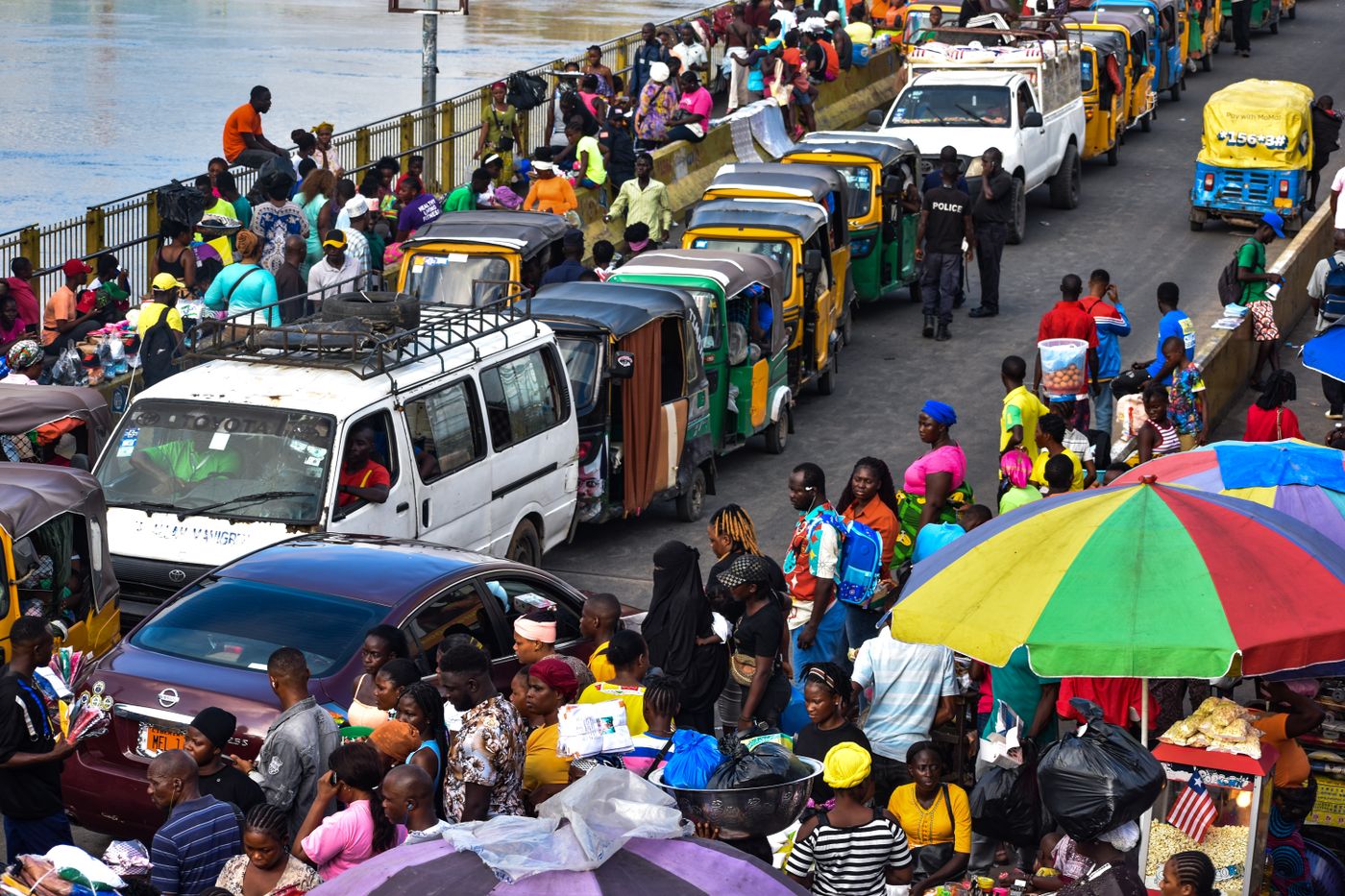
Begin with the number everyone in African tourism policy already knows, because the argument turns on reading it correctly. According to UN Tourism data, roughly four out of five international tourists worldwide travel within their own region; in 2013 the figure was 77 percent. Africa is the outlier. On the same measure, regional visitors have accounted for something closer to 46 percent of the continent's international arrivals.1 The standard interpretation of that gap is a deficit to be closed: Africans do not yet travel within Africa the way Europeans travel within Europe, and a regional market waits to be built. That interpretation is not wrong so much as incomplete, and the part it misses is the important part. A large share of the intra-African travel that already happens is not captured in the arrivals data at all, because of what kind of travel it is and what currency it moves in.
The Corridor Index framework reads tourism economies through their unit economics: who travels, what they are worth, and, decisively, who counts them. Applied here, it exposes a measurement problem dressed as a market problem. The travel that dominates African mobility is regional, overland, and undertaken to visit family or to trade, the category tourism statisticians label visiting friends and relatives, or VFR. It is the largest single segment of travel in the places where it has been studied, and it is, by the admission of the statistical agencies themselves, the segment their instruments capture worst. The continent is not failing to generate a regional tourism market. It is failing to see the one it has.
The market the agencies admit they undercount
The clearest evidence comes from the continent's most developed tourism economy, which also has its most developed tourism statistics. Arrivals into South Africa are overwhelmingly African in origin: close to three-quarters of total arrivals come from neighbouring Southern African Development Community states, with Zimbabwe alone supplying more than two million visitors a year, followed by Mozambique and Lesotho, people crossing for trade, for family, and increasingly for leisure and shopping.2 This is not a marginal flow. It is the bulk of the inbound market to the country that anchors African tourism. And yet South Africa's own Tourism research unit has acknowledged that its annual reporting captured domestic VFR travel while under-recording the international VFR travel arriving from neighbouring countries, meaning the official picture understates the contribution of exactly this regional market.2 When the best-resourced statistical agency on the continent concedes it is undercounting its largest inbound segment, the problem is structural, not local.
The academic record has been saying the same thing for two decades, largely unheard. The body of research led by Christian Rogerson and colleagues describes VFR travel in South Africa as the dominant form of domestic tourism, the base of local tourism economies, concentrated among Black African travellers, tied to the small-business and informal components of the sector, and persistently under-researched and under-measured relative to its size.3 The phrase that recurs in that literature is telling: VFR functions as an informal economy of domestic tourism. Informal, in tourism statistics as in trade statistics, is a synonym for uncounted.
Why the instruments look the wrong way
The reason the biggest market is the least visible is not incompetence. It is that the measurement systems were built for a different purpose. A tourism ministry in a foreign-exchange-constrained economy is, understandably, most interested in the visitor who brings hard currency: the European on a package, the American on safari, the receipts that service external debt and appear in the balance of payments. The entire apparatus of tourism promotion, satellite accounting and arrivals monitoring is calibrated to that visitor, because that visitor is what the treasury needs. The traveller who crosses from Zimbabwe into South Africa, stays with relatives, buys goods in rand and carries some home, generates real economic activity, but little of it looks like the foreign-exchange event the system was designed to record. The metrics are not blind by accident. They are blind by design, pointed at the currency the state most needs and away from the currency most of its regional visitors actually spend.
This is where the tourism story meets the monetary architecture, and the parallel is exact. Africa's development institutions have reached precisely this conclusion about intra-African trade. The African Development Bank, in its 2024 assessment, notes that when significant cross-border informal trade, much of it undertaken by women and young people, is taken into account, the true level of intra-African trade is likely considerably higher than the official figures show.4 The Institute for Security Studies reaches the same judgement: once informal intra-African trade is included, the internal-trade share is significantly larger than the official data records.4 Tourism is the same phenomenon measured by the same blind instrument. And the monetary plumbing confirms the diagnosis: because the continent carries more than forty currencies and cross-border payments have historically routed through dollars and euros, the Pan-African Payment and Settlement System was created to allow settlement in local currencies, a fix its backers estimate could save the continent around five billion dollars a year in foreign-exchange costs.5 A system that had to be built to make local-currency value visible to the banks is the same system African tourism needs to make local-currency travellers visible to the ministries.
The market that carried the recovery
If the regional market were as marginal as the receipts data implies, it would not have been able to do what it did after 2020. When the pandemic closed borders and the hard-currency long-haul visitor vanished, the travel that kept African tourism economies breathing was regional and domestic. UN Tourism's own reporting on the recovery attributed Africa's rebound in arrivals substantially to regional demand, the intra-African traveller returning while the intercontinental one was still grounded.1 The most recent and vivid case is Nigeria, where the flotation of the naira through 2024 and 2025 failed to deliver the promised surge of predictable foreign spending, and the economy instead leaned on its internal market: domestic travel expenditure was projected to run into the trillions of naira, dwarfing international tourism receipts.6 The lesson African tourism ministries keep being taught, and keep filing under emergency rather than strategy, is that the local-currency market is the resilient one. It is the market that shows up when the foreign-exchange market disappears, and it is the market the metrics are built to ignore.
The market you price in dollars is the only market you measure. It is also, it turns out, not the biggest one, and not the one that shows up when the dollars stop coming.
The honest limit of this argument
The measurement critique can be pushed too far, and the counter-argument deserves stating plainly. A regional VFR visitor and a long-haul luxury tourist are not economically equivalent, and it would be wrong to imply that better counting alone would close the revenue gap. The African visitor who stays with family and spends in local currency genuinely does generate less foreign-exchange earning per head than the European in a resort, and for a state that needs dollars to service dollar debt, that difference is real and cannot be measured away. The average spend of six hundred dollars per visitor to Africa, against a global average near nine hundred and ninety, is not purely an artefact of undercounting; some of it is a true difference in what these travellers spend.1 The honest version of the Corridor's claim is therefore narrower and sturdier: the regional market is systematically undercounted, it is larger and more resilient than the receipts data suggests, and a tourism strategy that optimises only for the measured hard-currency visitor is optimising for the smaller and more fragile half of its own economy. Counting the other half is not a cure. It is the precondition for treating it as something other than an afterthought.
Three tests over the next year
The first test is measurement itself: whether any African statistical agency, or UN Tourism in its role as custodian of the Tourism Satellite Account methodology, moves to capture regional VFR and informal cross-border tourism as a distinct and valued category rather than a rounding error. What is not measured is not managed, and at present the largest market is not measured. The second test is the African Union's own accountability. Its African Tourism Strategic Framework for 2019 to 2028 set an explicit target to double intra-regional tourism by 2023, a deadline that has now passed with little public reckoning of whether it was met, in part because the baseline it was measured against was itself incomplete.1 The third test is the monetary one: whether the spread of local-currency settlement through PAPSS begins to make intra-African tourism spending legible in the financial data, giving ministries a reason and a means to see the market they have been trained to overlook.5 Africa's largest tourism market already exists. The question the next decade will answer is whether the continent decides to build the instruments to see it, or continues to manage the half of its tourism economy that happens to arrive in dollars.