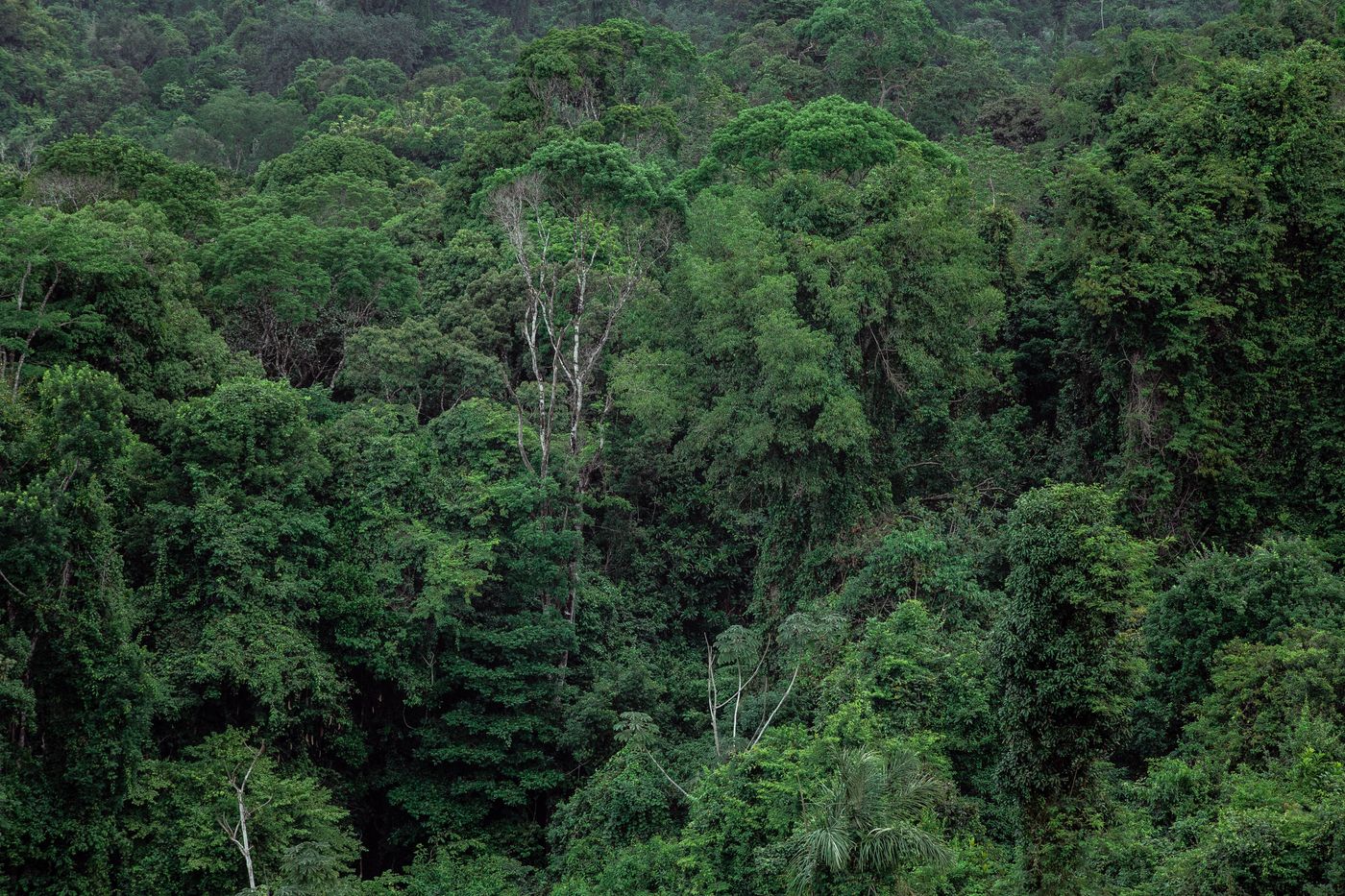
Consider what a carbon credit actually is. A landowner, a community or a government agrees to protect a forest that would otherwise be cleared, or to plant one, and an independent body certifies that the standing trees are absorbing a measurable quantity of carbon dioxide. Each tonne kept out of the atmosphere becomes a credit, and a company somewhere else buys that credit to set against its own emissions. In principle this is one of the few arrangements in which the world pays Africa for something it already has in abundance, its forests, its soil, its capacity to store carbon, rather than for something it has to dig up and ship away. The African Development Bank has estimated the continent could earn billions a year this way, and the African Carbon Markets Initiative, launched in 2022, set a goal of producing 300 million credits annually by 2030.2 The opportunity is real, and this issue does not dispute it. The question is who sets the price, and where the value goes once the credit is sold.
The Corridor Index framework reads any tourism or natural-resource economy by asking where the value is captured and who controls the terms of its sale. This publication has traced that question through hotels, airlines, booking platforms and coastlines. Carbon is the newest asset in the series and in some ways the starkest, because the thing being sold is not a room or a flight but the ecological function of African land itself, and the market that prices it sits almost entirely offshore. The forest is sovereign African territory. The carbon it stores is sold into a market whose price, whose verification and whose rules are set somewhere else. That gap, between owning the asset and pricing it, is the subject of this issue.
The price gap, in the words of the Bank
The clearest statement of the problem comes from the institution that most wants the market to succeed. Akinwumi Adesina, who led the African Development Bank until 2025, has said plainly that foreign buyers sometimes pay as little as three dollars for a tonne of carbon dioxide from an African project, while permits in a regulated market such as the European Union's Emissions Trading System can command around two hundred euros a tonne. He described the difference as a carbon grab, one that shifts value out of the host countries rather than keeping it where the forest stands. Independent figures point the same way: one analysis put the average African voluntary offset at around two dollars a tonne in 2022, against roughly eighty-five dollars in the EU's regulated system. The exact multiple moves with the market and the credit type, but the shape does not. Africa is selling into the cheap end of a market whose expensive end is reserved for others.1
The reason is structural, not accidental. Most African credits are sold on the voluntary market, where companies buy to meet their own climate pledges rather than a legal obligation, and voluntary credits are worth far less than the compliance permits traded in regulated systems like Europe's. A continent whose credits are almost all voluntary is, by the design of the market, selling the lower-value version of the same molecule. Africa issued around three-quarters of the credits it has ever produced into this softer market, and the price it received reflects that.2
Where the value lodges on the way out
Between the forest and the final buyer sits a chain of intermediaries, and each takes its share. Project developers structure and finance the scheme. Verification bodies certify the credits. Brokers and traders carry them to market and sell them on, often more than once, at prices the original community never sees. By the time a credit reaches the company that retires it, the money has passed through several hands, and the share that returns to the people protecting the forest is frequently a small fraction of the final sale. The order in which the revenue is described in market literature is itself revealing: it flows to developers, investors and governments, and then to communities. The community that does the actual work of keeping the forest standing tends to be last in the queue, and the queue is long.
This is where the carbon story meets a scholarly literature that has been building for over a decade. Researchers examining forest-offset projects in Uganda described the outcomes as amounting to carbon colonialism, a state-enabled enclosure of land in which the livelihood costs fall on local communities while the climate benefit is claimed elsewhere. The Oakland Institute has documented similar patterns across the continent under the heading of green colonialism, and a growing body of work in African political economy frames the current wave of carbon deals as a new scramble for African land. This issue extends that literature rather than restating it. The land-rights critique is well established. The point worth adding is the pricing one: even where a project does no harm, even where the land rights are clean, the continent is a price-taker in a market it did not design, accepting whatever a developer or buyer offers, in the same way a hotel owner signs the operator's template or a lodge accepts the platform's commission. The value gap is not only about who is displaced. It is about who sets the price.3
The sovereignty question, and who is answering it
Some African states have started to treat this as a question of sovereignty rather than charity, and their moves show what pricing power would look like. In 2023 Zimbabwe announced it would cancel existing carbon-offset agreements and require that half of all revenue remain in the country, an assertion that the state, not the foreign developer, sets the terms on which its natural capital is sold. The move unsettled the market precisely because it challenged the assumption that African credits are the developer's to price. At the other end of the spectrum sits a deal like the one the Dubai-based firm Blue Carbon signed with Liberia, a memorandum for the rights to generate and sell credits across roughly a tenth of the country's forests, an arrangement critics warned would cede sovereignty over a vast area of national territory to an external actor. The two cases mark the range of the choice in front of African governments: to price and control the asset themselves, or to sign away the rights to it wholesale. The market will not resolve that choice on their behalf, because the market is currently structured to prefer the second.4
Even where the land rights are clean, the continent is a price-taker in a market it did not design. The value gap is not only about who is displaced. It is about who sets the price.
The honest limit of the argument
There are two ways this critique can overreach, and both deserve stating. The first is that the low price is not purely theft. African voluntary credits sell cheaply in part because the market has real and well-founded doubts about quality, whether the forest would truly have been cleared without the project, whether the carbon savings are permanent, whether they are double-counted. A wave of integrity concerns across 2023 and 2024 pushed buyers toward a smaller pool of trusted, higher-priced credits and away from opaque ones, and some African projects fell into the second category for reasons that had nothing to do with exploitation. A fair price requires credible measurement, and building that is real work that cannot be skipped. The second caution is that carbon markets are a limited climate tool at best. Even at scale, high-quality offsets could cover only a small share of global emissions5, and there is a genuine risk that they let large polluters delay cutting their own emissions while buying cheap absolution from a forest in the global South. An honest account of African carbon has to hold both the value-capture problem and the integrity problem at once. The Corridor's claim is the narrower one that survives both cautions: a continent that owns the world's forests should not also be the price-taker in the market for their carbon, and the difference between three dollars and two hundred is too large to be explained by quality alone.
Three tests over the next year
The first test is pricing power. Whether more African states follow Zimbabwe in setting terms on their own carbon, through national registries, minimum prices or revenue-retention rules, will determine whether the continent remains a price-taker or starts to set the floor beneath its own natural capital. The second is the shift from voluntary to compliance markets. Kenya and South Africa already run domestic carbon-pricing systems, and Article 6 of the Paris Agreement is beginning to create compliance-grade demand for African credits; whether the continent can move its supply from the cheap voluntary market into higher-value regulated ones is the single biggest lever on the price it receives. The third is who captures what reaches the ground. Building registries and verification capacity on the continent, so that African bodies certify African carbon rather than paying offshore intermediaries to do it, would keep more of each credit's value at home and shorten the queue in front of the communities that keep the forests standing. Africa owns the forests. Whether it comes to price the carbon they store, rather than accept the price it is offered, is the question the next decade of climate finance will answer for it, or allow it to answer for itself.