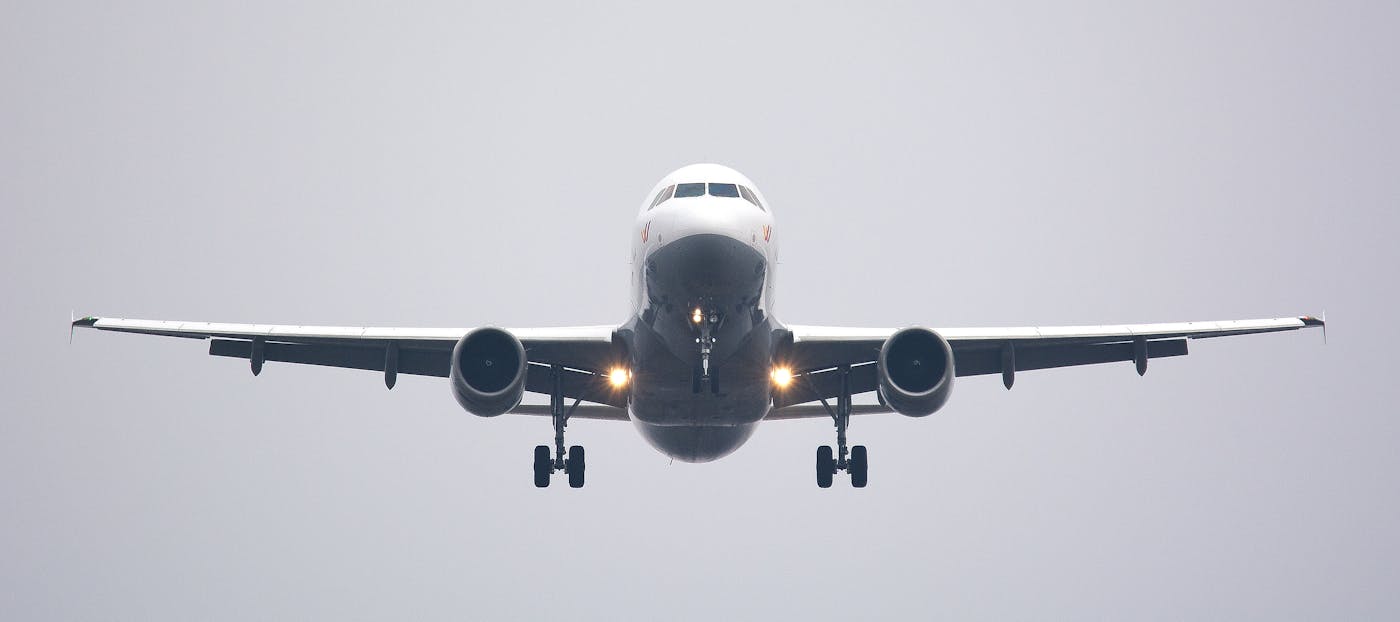
On 2 April 2025, the Namibian Presidency confirmed that President Netumbo Nandi-Ndaitwah had committed to relaunching Namibia's national airline through a public-private partnership model, with operations expected to resume between June and December 2026. The new carrier, named Namibia Air, would begin with regional Southern Africa routes before expanding to Frankfurt and Cape Town. N$3 billion in investment is required over five years. N$20 million has been allocated for a feasibility study. The expression of interest for private partners was finalised in August 2025. Namibia Air is being built. What is not being built, at the same pace or with the same political urgency, is the SADC Single Aviation Market that would give Namibia Air the regional framework without which it cannot achieve scale, sustainability or strategic purpose.

The Global Event

A new airline without a new architecture.

Air Namibia was liquidated in February 2021, a decision taken under President Hage Geingob's Cabinet on the grounds that the airline had become an unsustainable financial burden. The airline had consumed more than N$11 billion in government bailouts over its operational life, according to The Namibian. Its assets at book value stood at N$981 million as at August 2020 against liabilities of N$3 billion. The liquidation cost the government an additional N$300 million in worker salary payments. The total fiscal cost of Air Namibia's failure exceeded US$453 million at 2021 values, according to Wikipedia's assessment of the liquidation, equivalent to approximately US$538 million in 2025 prices.

President Nandi-Ndaitwah, who took office in March 2025, has reversed that assessment. She regards the airline as a national asset and a matter of sovereign pride, and has committed to relaunching it under a sustainable public-private partnership model that avoids the governance failures of its predecessor. The new carrier has been formally named Namibia Air. The government has been explicit that it is not reviving Air Namibia. It is building something new, with a different ownership model, a phased route strategy and a feasibility framework that the previous iteration never had. The Swapo Implementation Plan identifies 700 direct and 500 indirect jobs as the projected employment impact. The relaunch is a significant political commitment from a new president determined to demonstrate sovereign economic agency.

Namibia Air — Key Timeline and Data Points
Feb 2021
Air Namibia liquidated after consuming N$11B+ in government bailouts. Liquidation cost estimated at US$453M
Mar 2025
President Nandi-Ndaitwah confirms relaunch commitment. N$20M allocated for feasibility study. PPP model confirmed
Jun–Dec 2026
Targeted launch window. Phase One: regional Southern Africa routes. Phase Two: Frankfurt and Cape Town

The structural problem is that Namibia Air is being designed as a standalone national carrier in a regional aviation market that does not reward standalone national carriers. The SADC aviation landscape is dominated by South African Airways, which recorded 81.26 percent on-time performance in 2025 to lead Africa, and a growing low-cost sector including FlySafair, which introduced new routes into Namibia in 2024 following the Air Namibia void. Ethiopian Airlines, the continent's most aggressive network builder, operates connecting traffic through Addis Ababa that redirects Southern Africa passengers away from regional hubs. In this competitive environment, Namibia Air's Phase One regional strategy faces the same fundamental challenge that destroyed its predecessor: thin routes, low load factors and fuel costs that represent 35 to 40 percent of operating expenses against a continental airline average net margin of 1.2 percent, according to IBA Group data from October 2025.

The Structural Shift

SAATM has the signatures. It does not have the political will.

The Single African Air Transport Market was launched as a flagship African Union programme in 2018, built on the foundation of the Yamoussoukro Decision and designed to create a single unified air transport market across the continent. As of 2026, 38 African states have signed SAATM and 26 have taken the further step of signing Memoranda of Implementation, collectively accounting for approximately 80 percent of Africa's air traffic, according to the African Civil Aviation Commission. The framework has produced measurable outputs: more than 110 new intra-African routes developed, 60 bilateral air services agreements modified and aligned with liberalisation principles, and the development of regulatory texts covering competition, consumer protection and dispute resolution.

Africa remains more open to external aviation partners than to fellow African states. At global air services negotiation forums, African governments sign agreements with non-African partners with large delegations and significant political backing. Similar energy is rarely applied to concluding agreements with neighbouring states.

The gap between commitment and implementation is structural and well documented. A panel discussion at the African Airlines Association Annual General Assembly, reported by African Pilot in December 2025, noted that travelling between African cities often takes longer and costs more than travelling to the Middle East or Europe. A journey from Tunisia to Southern Africa can take more than 13 hours. Many governments maintain older bilateral or regional agreements with clauses that directly contradict SAATM goals. These older pacts allow governments to apply limits on flight frequencies, reject traffic rights or impose high taxes that make operations more expensive, while formally remaining signatories to the liberalisation framework. Without enforcement mechanisms, SAATM risks remaining a framework rather than a functioning market. The African Civil Aviation Commission has mandated implementation of the Yamoussoukro Decision, but consequences for non-compliance have not materialised in seven years of the programme's existence.

The SADC Single Aviation Market sits within this broader continental picture. South Africa remains Africa's largest domestic aviation market with 1.7 million seats in April 2026, an 8.7 percent year-on-year increase, according to OAG's April 2026 data. Total Africa aviation capacity reached 23.9 million seats in April 2026, up 5.2 percent year on year. The continent's aviation sector is growing. The structural fragmentation that prevents that growth from becoming a functioning intra-regional network is not a data problem. It is a political will problem. And Namibia Air is being launched directly into the middle of it.

The Tourism Flow Implication

Namibia's tourism corridor depends on connectivity it cannot generate alone.

Namibia's tourism sector is performing strongly by its own historical standards. Hotel occupancy reached 67.55 percent in August 2025, the highest monthly rate recorded, according to Namibia Trade Network data. Tourist spending is projected to rise 50 percent year on year through the high season, according to Simonis Storm analysis. The 2025 tourism forecast projects a 7.3 percent rise in visitor numbers and projected tourism revenue of N$4.6 billion. Tourism contributes N$7.2 billion to Namibia's GDP and supports tens of thousands of direct and indirect jobs. Namibia recorded 863,872 international tourist arrivals in 2023, nearly doubling from 461,027 in 2022 as post-pandemic recovery accelerated.

Germany, Austria and Switzerland — the DACH market — contributed 40.29 percent of total Namibia arrivals in April 2025. These visitors fly European carriers. Namibia Air cannot compete on Frankfurt routes without the scale that a functioning SADC open skies framework would generate from regional traffic aggregation.

The Sovereign Tourism Architecture framework identifies the capacity of a state to control the systems and capital flows governing its own tourism economy as the fundamental measure of strategic maturity in this sector. Namibia's architecture reveals a critical dependence on connectivity infrastructure it does not own or control. The Corridor Index consequence is equally precise. Namibia's tourism economy depends on long-haul European source markets that it currently serves through European carriers, primarily Condor and Lufthansa on the Frankfurt route. The DACH market alone represents 40.29 percent of arrivals. South Africa contributes another significant share as both a transit point and a direct source market. This means Namibia's connectivity is structurally dependent on hubs it does not control. Windhoek Hosea Kutako International Airport functions as an entry point, not a hub. Namibia Air's Phase One regional strategy will not change that. It will add frequency on routes that already exist — Johannesburg, Cape Town, Gaborone — without creating the new connectivity architecture that would allow Namibia to capture visitors from Asian and Middle Eastern markets whose share of total arrivals remains low. The Mobility Corridor that Namibia's tourism economy needs runs through a regional framework, not a standalone carrier.

The Displacement Dividend dimension of this issue is significant. As analysed in Issue 009, the Middle East escalation of 28 February 2026 displaced an estimated $34 to $56 billion in global tourism spend. That displacement created an absorption window for alternative destinations including Southern Africa. Namibia, with its record occupancy rates and growing premium tourism profile, was theoretically positioned to benefit. Its connectivity architecture — dependent on European carriers and South African transit — was not. Namibia Air, if launched with a purely regional Phase One strategy, will not address this gap. The routes that would connect Namibia to displaced Middle Eastern demand and emerging Asian source markets require long-haul capacity that a startup carrier with N$3 billion in projected investment cannot generate on its own.

The Strategic Move

Three interventions Namibia and SADC cannot defer to the next aviation cycle.

The first intervention requires SADC member states to convert their SAATM commitments into enforceable bilateral agreements with specific route liberalisation targets, frequency minimums and timeline commitments. The current framework allows governments to sign Memoranda of Implementation while maintaining older bilateral agreements that contradict liberalisation principles. This ambiguity is not accidental. It serves the short-term revenue interests of governments that treat aviation as a tax source rather than an economic infrastructure. The Airlines Association of Southern Africa, whose CEO Aaron Munetsi has repeatedly flagged fuel costs, infrastructure failures and regulatory inconsistency as the sector's most acute vulnerabilities, has the analytical case. What it lacks is the enforcement mandate. A SADC Aviation Liberalisation Compact, with specific route targets, agreed fare caps on key city pairs and a compliance review mechanism with consequences for non-implementation, would give Namibia Air the regional market it cannot create through unilateral action.

The second intervention requires Namibia Air to be structured from its launch date as a regional network carrier rather than a standalone flag carrier. This means negotiating interline and codeshare agreements with South African Airways, Kenya Airways, Ethiopian Airlines and RwandAir before the first flight departs, not after the route network has been established. The history of African flag carrier failures is substantially a history of carriers that attempted to build network value before securing network partners. Ethiopian Airlines, the continent's most successful carrier, built its network through codeshare and interline agreements that gave it access to passengers it could not generate independently. Namibia Air's route strategy should be designed explicitly around the gaps in the existing Southern Africa network, not around the political symbolism of flag carrier route restoration.

The third intervention requires the SADC Secretariat to establish a minimum viable connectivity standard as a condition of SAATM membership, defining a minimum number of intra-SADC city pairs that must be served at competitive fares within a defined timeline. Africa's aviation liberalisation agenda has stalled precisely because there are no consequences for non-implementation. Governments benefit from the diplomatic credibility of SAATM membership without bearing the commercial cost of genuine market opening. A minimum connectivity standard, verified by AFCAC and enforceable through SAATM's dispute settlement mechanism, would create the accountability architecture that seven years of goodwill commitments have failed to produce. Namibia Air's relaunch provides exactly the moment of political salience that SADC needs to move from a framework to a functioning market. Whether Southern Africa's governments choose to use that moment is the question that this publication will continue to track.