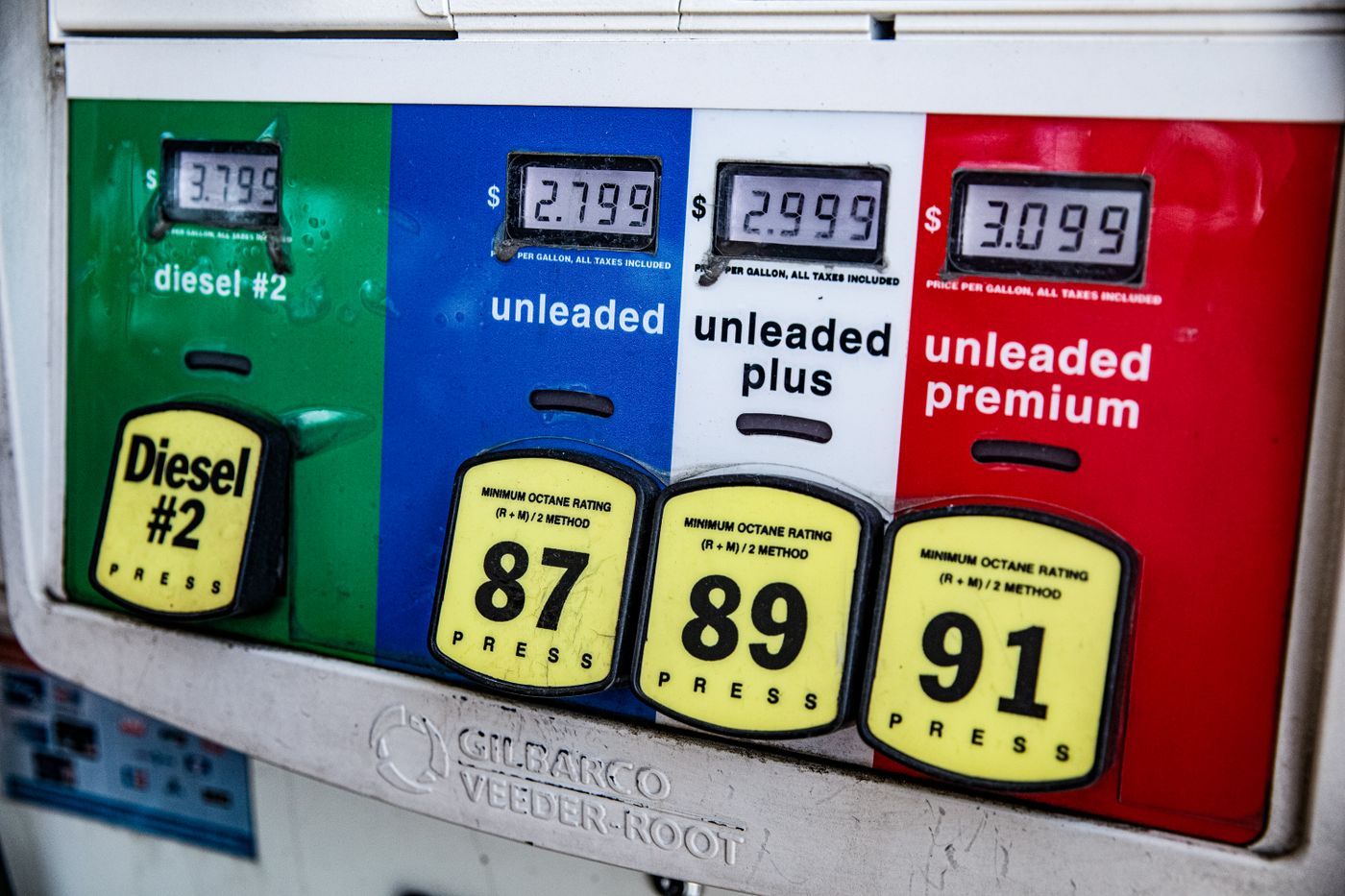
Southern Africa's peak winter safari season runs from May to September. It is the period when the bush thins, game concentrates at water sources and the continent's most commercially significant wildlife destination does its most important revenue work. May 2026 will open this season with a double shock: diesel prices projected to rise by R11.50 per litre on top of the R7.51 already absorbed in April per the Department of Mineral Resources and Energy (DMRE), and the simultaneous expiry of a temporary R3.00 fuel levy reduction that has been the only thing cushioning the tourism operating cost base since 1 April. The tourism sector is a price taker in a commodity market it does not control. What it can control is the policy architecture that determines whether external shocks compress its margins permanently or temporarily. That architecture does not yet exist.

The Global Event

Two shocks. One date. The tourism sector caught between them.

The fuel price cycle in South Africa is determined monthly by the Department of Mineral Resources and Energy, based on data from the Central Energy Fund. The CEF tracks two variables: the international price of Brent crude oil, denominated in US dollars, and the rand-dollar exchange rate. When oil rises or the rand weakens, an under-recovery accumulates, which is the gap between what fuel costs to import and what consumers currently pay. That gap is corrected at the start of each month. April 2026 saw petrol prices rise by R3.06 per litre and diesel by between R7.37 and R7.51 per litre, driven by the escalation of conflict in the Middle East and its effect on shipping routes through the Strait of Hormuz. Brent crude was trading above $100 per barrel. National Treasury intervened with a temporary reduction of R3.00 per litre in the general fuel levy, bringing petrol from R4.10 to R1.10 per litre and diesel from R3.93 to R0.93 per litre. The intervention was explicitly time-limited to 5 May 2026.

As of 7 April 2026, the CEF's daily tracking data showed an under-recovery of R4.40 per litre for petrol and R12.50 per litre for diesel. Early projections from the CEF, published by multiple South African outlets, placed the May diesel increase at between R11.50 and R11.55 per litre. A subsequent ceasefire between the United States and Iran eased global oil prices by approximately $17 per barrel and boosted the rand, which analysts estimated would reduce the projected increase by approximately R2.70 per litre. Even after this relief, diesel is still projected to increase by approximately R8.80 to R9.00 per litre on 6 May 2026, the first Wednesday of the month when prices are adjusted. That increase lands two days after the fuel levy relief expires. The timing is not coincidental. It is structural. And it falls directly on the opening week of Southern Africa's most commercially critical tourism season.

Southern Africa Diesel Shock Timeline, April to May 2026

1 April
Diesel increases R7.37 to R7.51 per litre. Petrol rises R3.06. Treasury cuts fuel levy by R3.00 as temporary relief
5 May
R3.00 per litre fuel levy relief expires. All operators absorbing April hike now face full levy reinstatement
6 May
May price adjustment effective. Diesel projected to rise further R8.80 to R11.50 depending on final CEF data

Zimbabwe adds a regional dimension to the shock that compounds the SADC-wide exposure. The Zimbabwean government raised fuel prices to US$2.17 per litre for petrol and US$2.05 per litre for diesel, citing global supply pressures. Clive Chinwada, President of the Tourism Business Council of Zimbabwe (TBCZ), stated that safari and tour operators were experiencing immediate cost increases across all mobility-related activities, including guest transfers, supply chains and field operations. He noted that the bulk of Victoria Falls business operates on contracted rates that cannot be renegotiated immediately, and called for targeted fuel duty relief for the tourism sector. Zimbabwe now has the most expensive fuel in the Southern African region, in a country that depends on Victoria Falls as its single most important international tourism asset. The SADC fuel shock is not confined to one country. It is running through the entire corridor.

The Structural Shift

Southern Africa's tourism product runs on diesel. That is not a logistics detail. It is a sovereignty problem.

The Sovereign Tourism Architecture framework identifies five structural dimensions of a destination's capacity to control its own tourism economy: booking infrastructure, air access, accommodation ownership, revenue retention and diplomatic source market architecture. The Southern Africa fuel shock reveals a sixth dimension that the framework must now account for: input cost sovereignty. The degree to which a tourism destination controls the cost of the physical inputs required to deliver its product to paying visitors.

Diesel powers every layer of the Southern African safari tourism product. The generator at the lodge. The Land Cruiser on the game drive. The Cessna on the bush strip. The truck delivering food and linen to a camp accessible only by dirt road. When diesel doubles in price, the entire operating cost structure of the product shifts simultaneously.

South Africa's tourism sector contributed approximately 9 percent of GDP in 2024 and supported 1.8 million direct and indirect jobs, according to the World Travel and Tourism Council. The country welcomed 10.48 million international tourists in 2025, a 17.6 percent increase on 2024 and a record, according to Statistics South Africa. High-value safari tourism, concentrated in the Kruger and Sabi Sands ecosystem, the KwaZulu-Natal reserves and the Eastern Cape private reserves, operates on a product model priced at between $500 and $950 per person per night for a mid-range lodge experience, according to Tailormade Africa's 2026 pricing data. That pricing model was built on operating cost assumptions that did not include a diesel price of R25.35 to R26.11 per litre, which is the current wholesale price, or what that price will be after the May adjustment.

The structural problem is contractual. A survey conducted by Tourism Update among South African tour and wheels operators found that 54 percent of respondents had already fixed their annual rates for 2026 and would have to absorb fuel price hikes themselves. The remaining 46 percent indicated they would likely implement a fuel surcharge or adjust rates. Steve Maidment, General Manager of Operations at Drifters, a division of Tourvest Destination Management, noted that overland and safari tours remain resilient to the current spike but acknowledged that there is a limit and the situation would continue to be monitored. The majority of the industry is not resilient to this shock. It is exposed to it on fixed rates it committed to months before the Middle East conflict escalated and before Brent crude crossed $100 per barrel. That exposure is not a management failure. It is a structural design flaw in how Southern Africa prices and sells its tourism product to international markets.

The Tourism Flow Implication

The Corridor Index consequence: competitiveness erosion at precisely the wrong moment.

Southern Africa's tourism product is priced in rand but sold in dollars, pounds and euros. A weaker rand has historically provided a cushion: when the rand depreciates against major currencies, South Africa becomes better value for foreign visitors even as its domestic cost base rises. The rand was trading between R16.43 and R16.91 to the dollar in early April 2026. That rate provides some protection. The problem is that the rand's depreciation is itself a consequence of the same geopolitical instability driving the oil price shock, meaning the currency buffer and the cost shock are arriving from the same source simultaneously. The buffer is smaller than it appears because the shock is larger than the rate suggests.

SANParks introduced temporary fuel restrictions at select camps within the Kruger National Park during April 2026. Diesel was temporarily unavailable at Orpen Camp. Murray Graham of Discover Kruger Safaris reported that staff were advising guests to fill up after each drive because supplies were uncertain. He noted that some companies in the area had already increased prices and others may need to follow. SANParks maintained that the broader safari tourism impact would be negligible and that no permanent restrictions were planned. That assessment is contestable. A safari experience at which guests must plan itineraries around fuel availability is a diminished product, regardless of whether the formal infrastructure is functioning. The reputational cost of that experience lands in TripAdvisor reviews, in WhatsApp conversations between high-spend travellers and in the briefings that travel agents in London, New York and Frankfurt give to clients asking whether Southern Africa is worth the price.

The Corridor Index consequence of the fuel shock is not that Southern Africa becomes unaffordable. It is that Southern Africa becomes uncertain. For a product that sells on the promise of a flawless wilderness experience, uncertainty is the more serious commercial risk.

The Displacement Dividend assessment for the May 2026 shock runs in East Africa's favour. Kenya and Tanzania do not face the same fuel price architecture as South Africa. Kenya's petroleum pricing is regulated differently and its safari operating cost base, while also diesel-dependent, does not face the compound shock of a levy expiry coinciding with a commodity price spike timed to the opening of peak season. A travel agent weighing Southern Africa against East Africa for a client booking a July safari will not recite the diesel price differential. But the price differential will show up in the packages they quote. East Africa's Masai Mara and Serengeti circuits will price more competitively for July to September 2026 than they would have without the May diesel shock in South Africa. The Displacement Dividend does not require a formal policy decision. It flows automatically through price signals in origin markets.

The Strategic Move

Three interventions SADC's tourism ministries cannot leave to the market.

The first intervention is a sector-specific fuel duty rebate framework embedded in SADC tourism policy. South Africa's National Treasury demonstrated in April 2026 that targeted fuel levy relief is administratively achievable on short notice. The R3.00 per litre general levy reduction was implemented within days of announcement. What the tourism sector needs is not a general levy cut that expires in thirty days but a structured, sector-specific diesel duty rebate for registered tourism operators, analogous to the agricultural diesel rebate that already exists in South Africa's fiscal framework. The agricultural sector receives a rebate on diesel used in primary production. Safari tourism is primary production of a different kind: it converts wildlife, landscape and skilled guiding into foreign exchange earnings that flow into the South African economy at a rate of approximately one job per thirteen international arrivals, according to the WTTC. A tourism diesel rebate, capped at verified operational consumption and subject to operator registration requirements, would insulate the product's competitiveness from commodity price volatility without requiring general consumer fuel price subsidies that are fiscally unsustainable. The Tourism Business Council of South Africa has the institutional standing to negotiate this framework. The May 2026 shock gives it the political moment to do so.

The second intervention concerns product repricing architecture. The structural vulnerability revealed by the fuel shock is that Southern Africa's tourism product is priced too far in advance, on fixed-rate contracts that leave operators with no mechanism to respond to input cost changes between commitment and delivery. This is a design choice, not an inevitability. Dynamic pricing models, already standard in airline ticket pricing and increasingly common in accommodation booking platforms, allow for base rate plus variable surcharge structures that are transparent to buyers and contractually agreed at the point of booking. The Tourism Business Council of Zimbabwe specifically requested that tour operators be permitted to implement fuel levies or surcharges on contracted rates without triggering contract renegotiation clauses. That request points to a broader need for a SADC-wide standard contract framework for tourism services that includes a defined fuel surcharge trigger mechanism, activated when diesel prices exceed a specified threshold above the rate prevailing at the time of contract signature. This is not price gouging. It is elementary input cost pass-through that every other fuel-intensive industry already practices.

The third intervention is the most structurally important and the most neglected: energy transition investment in the safari operating model. Several Southern African lodges have already demonstrated that diesel dependency is not an inherent feature of the safari tourism product but a design choice that can be reversed. Chobe Game Lodge in Botswana introduced the first electric game drive vehicle and electric-powered safari boat in Africa in 2014. By 2021, the lodge estimated it had saved 15,000 litres of diesel and 38,000 kilograms of carbon dioxide emissions through its electric fleet. Cheetah Plains Lodge in the Sabi Sands converted its game drive vehicles to electric specification. Makanyi Lodge in the Timbavati operates a converted electric Land Cruiser. The cost of retrofitting a safari vehicle to electric specification is approximately US$37,000, according to Swedish start-up Opibus, which has conducted conversions in Kenya and Tanzania. A 55kWh battery provides a range of 150 to 200 kilometres per charge, sufficient for a full day of game drives. The investment case for electric conversion is strongest precisely when diesel prices are highest. The May 2026 shock is not only a cost management problem. It is an investment signal that the current diesel dependency model is structurally unsustainable and that the lodge and vehicle operators who move first to renewable energy will hold a durable competitive cost advantage over those who do not.