The Global Event

A Live Climate Warning. Issued Over the Exact Circuits That Drive East Africa's Peak Season Revenue.

On 27 January 2026, the IGAD Climate Prediction and Applications Centre released its seasonal forecast for the March to May rainfall season across the Greater Horn of Africa. ICPAC projected a 45 percent probability of wetter-than-normal conditions, warning of a likelihood exceeding 70 percent of rainfall above 300mm across parts of western Kenya, southern Uganda, much of Rwanda and Burundi, and northwestern Tanzania. Dr Abdi Fidar, Director of ICPAC, described the Greater Horn of Africa Climate Outlook Forum as a critical platform for translating seasonal forecasts into early action that protects lives, livelihoods and development.

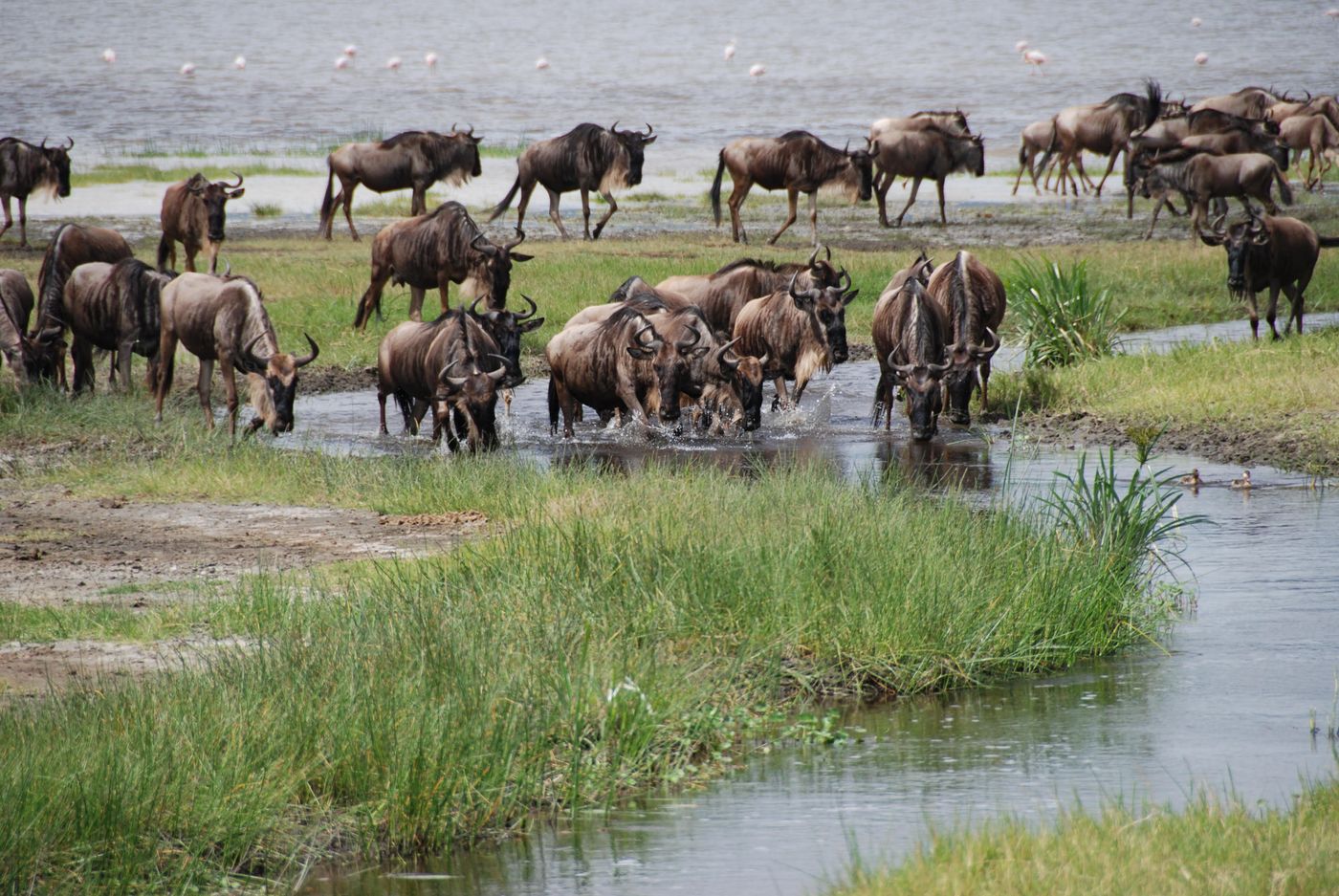
This is not a routine weather bulletin. The March to May season is East Africa's long rains. It is also the season during which the Great Wildebeest Migration begins its northward movement through the Serengeti toward the Mara River. When the long rains are extreme, whether too much or too little, the Migration loses its calendar. And when the Migration loses its calendar, East Africa's single most commercially valuable tourism product becomes structurally unreliable as a bookable experience.

The ICPAC warning is not arriving in isolation. It is arriving on top of a decade of compounding disruption to the ecosystem the Migration depends on, disruption now accelerating from two directions simultaneously: climate change attacking it from above, and luxury tourism infrastructure dismantling it from below. The tourism industry has no coordinated sovereign response to either.

The Climate Signal: ICPAC March to May 2026 Forecast
45%
Probability of wetter-than-normal conditions across most of the Greater Horn of Africa
70%+
Probability of rainfall exceeding 300mm in western Kenya, Uganda, Rwanda, Burundi and northwestern Tanzania
MAM
March to May contributes up to 60% of total annual rainfall in equatorial East Africa, and drives Migration timing
The Structural Shift

The Migration Is Being Broken From Two Directions. Simultaneously.

The Great Migration is not a single event. It is a 3,000-kilometre circular journey driven entirely by one variable: rainfall. With climate change, the long and short rainy seasons in Kenya and Tanzania are no longer as regular or predictable as they once were. The rains can be late or early, which throws the entire wildebeest calendar out of alignment.

The science is now firmly established. A research team from the universities of Hohenheim and Groningen, the Free University of Berlin, the IUCN, the Indian Institute of Management and the Kenya Meteorological Department, studying weather patterns in the Mara-Serengeti ecosystem since 1913, found that over the past six decades the region has experienced a temperature rise of 4.8 to 5.8 degrees Celsius, alongside increasingly frequent and severe droughts and floods. The mechanism is the Indian Ocean Dipole. The increased frequency and intensity of dipole events, driven by global warming and altered atmospheric circulation, are directly linked to more frequent and severe floods and droughts in the Mara-Serengeti ecosystem. Unpredictable rainfall makes animal migrations more erratic and often mistimed with periods of peak resource availability. Extended droughts suppress reproduction, reducing birth rates and increasing mortality among young animals.

Structured Insight 01

The Great Migration is marketed on a fixed calendar. That calendar no longer reflects the ecosystem. Every operator in East Africa currently sells July to October Mara River crossings as a near-guarantee. Climate science has made that guarantee structurally unsound. The gap between what the industry promises and what the ecosystem can deliver is widening with each passing year. That gap is a sovereign economic risk.

This is Sovereign Tourism Architecture failing at its most fundamental level. The policy and governance architecture that should be protecting the ecological asset on which the entire premium tourism economy depends is instead fragmenting it. Land-use decisions that subdivide wildlife corridors, lodge development approvals that generate an estimated 1,000 vehicles per day in the Masai Mara National Reserve, and fencing that closes ancient wildebeest routes are not external threats. They are decisions made within the regulatory systems that East Africa's tourism ministries and land authorities directly control. When Sovereign Tourism Architecture fragments the ecosystem it depends on, the contradiction is no longer theoretical. It is operational.

Now compound the climate pressure with a second, entirely man-made assault on the same ecosystem. Fences have blocked wildlife corridors, causing the wildebeest migration from the Loita Plains north of the Masai Mara to collapse from 140,000 individuals to fewer than 15,000. This is not a projection. It is a documented real-time observation published in the Atlas of Ungulate Migration by Smithsonian ecologist Jared Stabach and the Global Initiative on Ungulate Migration. The Mara-Loita wildebeest population has lost nearly 90 percent of its historic migratory footprint since 2020, driven by the rapid spread of fencing across previously open rangelands in Narok County.

What is erecting those fences? In part, the same tourism economy that depends on the Migration. There are now at least 7,000 beds across 290 lodges and camps in the Greater Mara Ecosystem, with an estimated 1,000 vehicles per day in the Masai Mara National Reserve during peak season. Private land subdivision to accommodate lodge development and associated infrastructure is physically closing the corridors that wildlife needs to move through. The golden goose is being strangled by the hands that feed it.

Structured Insight 02

The Mara-Loita collapse is not an isolated case. It is a leading indicator. Researchers describe it as rare to document such a dramatic migration collapse in real time. The same fencing dynamics that extinguished the Mara-Loita migration in five years are present, at varying intensities, across every major tourism corridor in the Greater Mara Ecosystem. The Serengeti-Mara migration, which still benefits from more open landscapes, is structurally exposed to the same forces. The Mara-Loita is the warning.

Structured Insight 03

Once lost, migration is difficult to restore. Wildebeest travel on routes that have been learned and refined over generations. The accumulated ecological knowledge embedded in a 1.5 million animal herd is not recoverable through policy announcements. The Mara-Loita population collapsed from 100,000 to 25,000 not because animals died en masse, but because confined animals cannot access the forage, water and calving grounds they need to reproduce successfully. Recovery requires physical corridor restoration, fence removal, land-use planning, not conservation rhetoric.

The Tourism Flow Implication

The Industry Is Selling a Product That Climate Has Already Started to Break.

The Great Migration generates hundreds of millions of dollars annually for Kenya and Tanzania. Peak season camps on the Mara River charge between $1,500 and $3,000 per person per night and sell out 12 to 18 months in advance, specifically because of the Migration. The entire premium positioning of East African safari tourism, the price premium that separates a Masai Mara camp from a generic wildlife destination, rests on the Migration being a predictable, bookable spectacle.

It is no longer reliably predictable. The Displacement Dividend framework, introduced in Issue 002 to analyse demand redirected by the Middle East conflict, applies here in reverse. In Issue 002 the Displacement Dividend was an opportunity: displaced demand flowing toward Africa. In Issue 005 it is a risk. Demand that East Africa currently captures through the Migration may itself be displaced toward more stable wildlife destinations. Southern Africa's Okavango Delta, Zambia's Kafue and Rwanda's mountain gorilla circuit do not depend on a single climate-sensitive annual event. If the Mara River crossing becomes structurally unreliable, high-yield European travellers with the financial flexibility to book alternatives will exercise that flexibility. The Displacement Dividend flows toward resilience. East Africa must ensure it remains the resilient choice.

The downstream consequences compound in three directions.

First, yield erosion. When the Migration becomes unpredictable, operators cannot sell fixed-date premium packages with confidence. They shift to flexible itineraries at lower margins, or they lose bookings entirely to destinations with more consistent wildlife products. The yield per visitor contracts precisely at the point when East Africa most needs it to grow, given the debt dynamics analysed in Issue 003 and the corridor competition analysed in Issue 004.

Second, reputational erosion. A significant proportion of the European long-haul market that drives East Africa's premium safari economy plans their trip specifically around the Migration calendar. When the experience fails to deliver, because the herds arrived three weeks early due to erratic rainfall, or because the Mara River levels are too high for crossings, the reputational damage reaches the highest-yield visitors first. These are the visitors East Africa most needs to retain.

Third, structural erosion of the asset itself. A migration that loses 90 percent of its footprint does not recover automatically when conditions improve. The ecological knowledge is gone. The corridors are physically blocked. And without coordinated intervention, the same forces that collapsed the Mara-Loita migration in five years will progressively constrain the larger Serengeti-Mara system over the following decade.

The Corridor Index, which measures the degree to which a destination captures, retains and reinvests visitor spend within its own economy, is directly exposed to this degradation. A destination whose primary premium product is becoming climatically unreliable and physically constrained loses the competitive positioning that justifies high yield. The Corridor Index for the Masai Mara and Serengeti circuits is not under pressure from aviation competition alone, as analysed in Issue 004. It is under pressure from the ecological foundations of the product itself. Corridor Index scores that depend on a functioning Migration will fall as the Migration becomes less functional. That is a compounding structural vulnerability with no short-term fix.

East Africa does not have a wildlife problem. It has a corridor governance problem. And corridor governance is a policy choice.

The Corridor Issue 005

The ICPAC flood warning for March to May 2026 is therefore not just a weather advisory. It is the latest manifestation of a structural trend that is simultaneously making the Migration less predictable from above and more physically constrained from below. The tourism industry, the governments and the conservation sector have no coordinated sovereign response to either pressure. That is the structural vulnerability this issue sets out to name.

The Strategic Move

Three Moves East Africa Cannot Defer

East Africa must treat the Great Migration as what it actually is: a sovereign economic asset operating under existential climate and infrastructure pressure, requiring the same quality of strategic intervention that any sovereign asset under threat demands. Three moves are non-negotiable.

The Corridor Strategic Framework
Protecting the Migration as Sovereign Economic Infrastructure
Three structural interventions East Africa must execute before the asset degrades further
1
A Wildlife Corridor Protection Mandate at EAC Level, with Binding Land-Use Restrictions
The Mara-Loita collapse did not happen because of ignorance. It happened because no regulatory architecture prevented it. Narok County land subdivision proceeded legally. Lodge development proceeded with permits. Fencing proceeded on private land. And collectively they extinguished a 100,000-animal migration in five years. Kenya has the science, from the Smithsonian, the IUCN and the University of Hohenheim. What it lacks is the political architecture to act on it. The EAC Secretariat must develop binding minimum corridor protection standards that apply across member states, above the level of national land-use discretion. Research shows that smaller, strategically placed corridors linking the Mara Reserve, community wildlife conservancies and the Loita Plains can outperform larger, more costly interventions. The science exists. The mandate does not.
2
A Climate-Adaptive Safari Product Strategy, Replacing the Fixed-Calendar Marketing Model
Every major operator in East Africa currently markets the Migration on a fixed calendar that climate has already broken. The industry response should not be to hide this, it should be to build a new product paradigm around it. Mobile camps that track the herds in real time. Migration intelligence services integrated into booking platforms. Flexible itinerary structures that deliver premium value regardless of river crossing timing. Multi-destination EAC packages that reduce dependency on any single spectacle. The operators who build this adaptive infrastructure first will capture the premium segment permanently. Those who continue selling a fixed-calendar product that climate has already made unreliable will face compounding reputational and financial risk as the pattern becomes undeniable to sophisticated travellers.
3
Classify Wildlife Corridor Infrastructure as Sovereign Tourism Infrastructure, Eligible for AfDB and Development Finance
Tanzania's participation in the Ruvuma River Basin Conservation Initiative, a 7.12 million US dollar, five-year programme funded by the Global Environment Facility and coordinated by the IUCN, demonstrates the template. Conservation financing structured as tourism sovereignty investment. The EAC should build on this precedent and develop a formal application to the African Development Bank for a Regional Wildlife Corridor Restoration Facility, explicitly framed as tourism infrastructure investment under the AfCFTA connectivity agenda. Wildlife corridors are tourism infrastructure. They generate the product that drives premium yield. Their restoration and protection should be financed as such, not left to the discretionary conservation budgets of individual member states operating under IMF fiscal constraints.
Conclusion

The Migration does not care about ministerial timelines. It responds to rainfall, temperature and the openness of the land it needs to move across. Climate change is altering the rainfall. Fences and lodges are closing the land. The policy response has been neither coordinated nor proportionate to the scale of what is being lost.

The ICPAC warning covering March to May 2026 is live right now, covering the exact circuits that drive East Africa's peak season revenue. The Mara-Loita collapse is documented and accelerating. The Indian Ocean Dipole signal is strengthening. These are not future risks. They are present conditions.

The strategic actors with the tools to address this, the EAC Secretariat, the African Development Bank, the Kenya and Tanzania governments and the IUCN, all have mandates that encompass it. What has been missing is the political will to treat corridor governance as the sovereign economic priority it is, rather than the conservation afterthought it has historically been treated as.

East Africa does not have a wildlife problem. It has a corridor governance problem. And corridor governance is a policy choice.